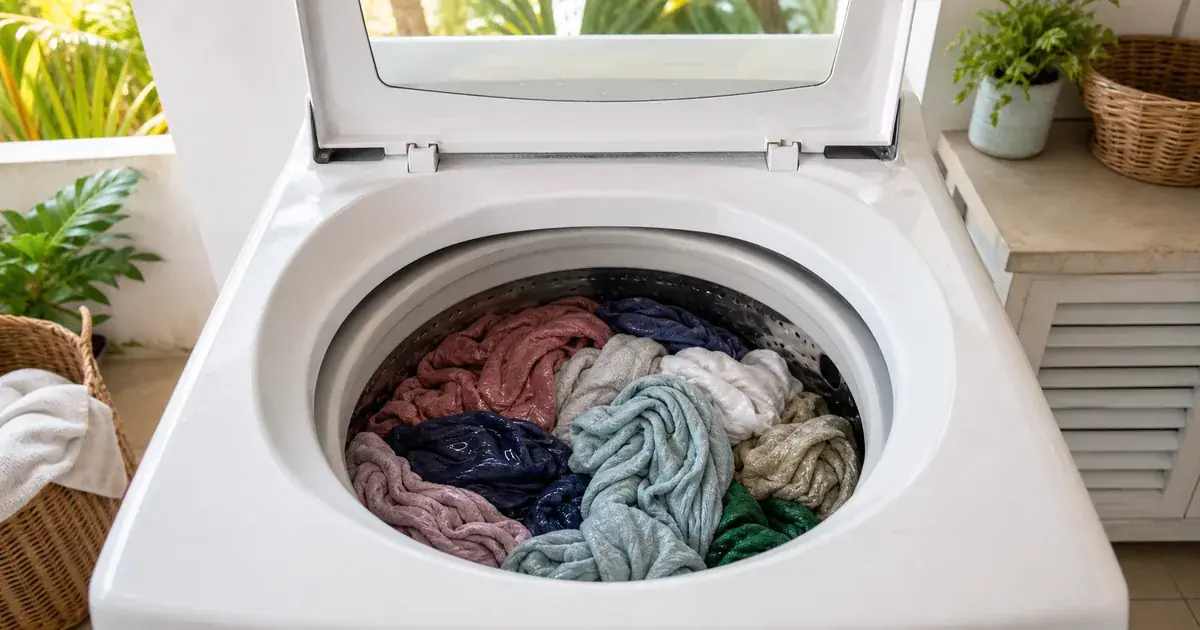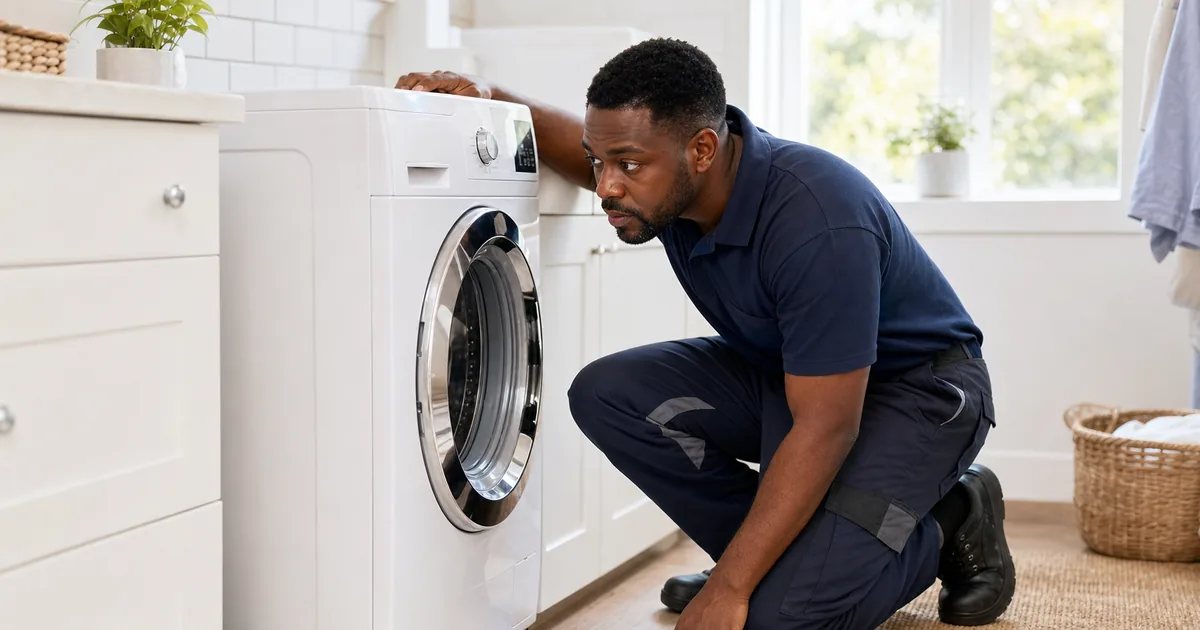
There are few things more frustrating than opening your washing machine at the end of a cycle and finding it sitting in a tub of dirty water. Your clothes are soaked, the floor's at risk, and you've got a full day ahead. I get this call more than almost any other, so let me walk you through exactly what's happening — and what I check, in order, when I arrive.
The good news is that a machine that won't drain is usually telling you something simple. A lot of the time it's not a dead machine at all. It's a blockage, and once you understand where the water is supposed to go, you can often spot the problem yourself before you ever pick up the phone.
First things first: stop the machine and get the water out
Before anything else, switch the machine off at the wall. Don't keep hitting "start" hoping it'll clear on its own — every extra cycle forces a struggling pump to push against water it can't move, and that's how a small blockage turns into a burnt-out pump.
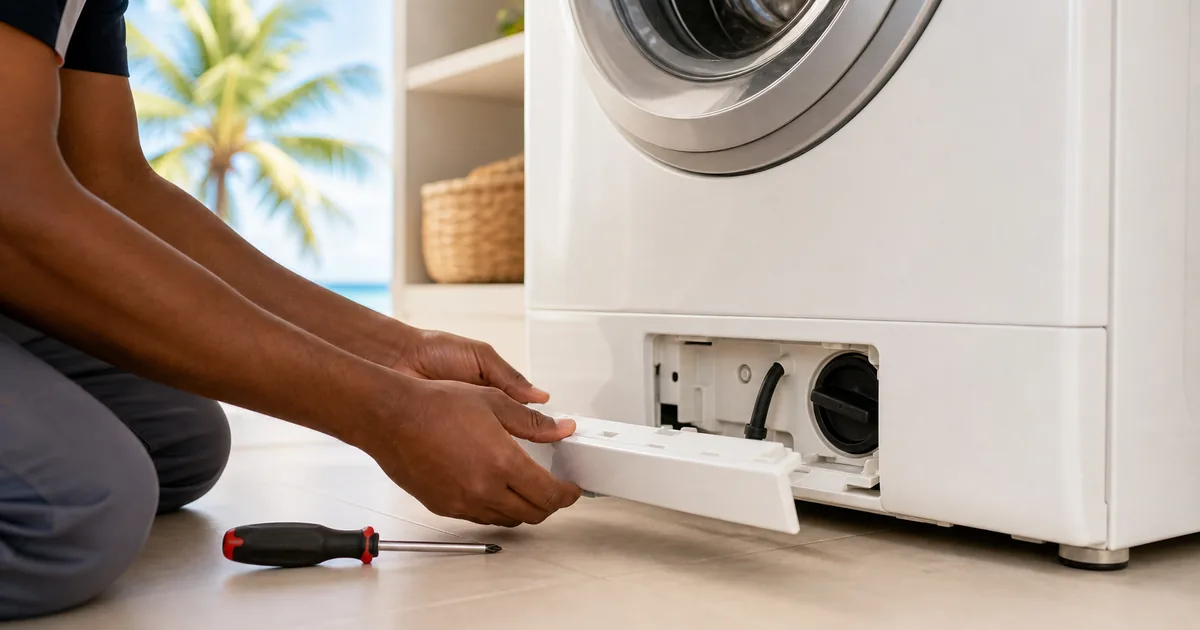
If your machine has a drain filter flap at the bottom front (most front-loaders do), put a shallow pan and some towels down, because there's a litre or two of water waiting behind it. Top-loaders usually drain through a hose at the back instead. Either way, get the standing water out before you start poking around. Working in a flooded machine is messy and, if there's any electrical fault involved, unsafe.
The usual suspects, in the order I check them
After years of doing this, I've learned to work from the cheapest, most common cause up to the most serious. Nine times out of ten, the answer is in the first three.
1. A blocked drain filter
This is the number one cause, full stop. The drain filter (sometimes called the pump filter) is there to catch coins, buttons, hair clips, and the small things that fall out of pockets. Over months it clogs up with lint and debris, and eventually the water can't get past it.
On a front-loader, you'll find it behind a small panel at the bottom front. Unscrew it slowly — the water will come — and clean out whatever's trapped. You'd be surprised how often I pull out a $20 coin, a hair tie, and enough lint to knit a sweater.
2. A kinked or blocked drain hose
The drain hose runs from the back of the machine to your standpipe or sink. If the machine has been pushed back against a wall, that hose can kink. It can also collect a slimy build-up of detergent and lint on the inside over time, especially if you use a lot of fabric softener.
Pull the machine out gently, look for kinks, and if you can detach the hose, run water through it to check the flow. In our humidity, that internal gunk builds up faster than people expect.
3. Something stuck in the pump
If the filter's clean and the hose is clear, the next stop is the pump itself. A coin or a small sock can work its way past the filter and jam the pump impeller. When that happens you'll often hear the pump humming or buzzing but no water moves. This is where it crosses from a DIY job into technician territory, because reaching the pump usually means opening the machine.
4. A failed drain pump
Pumps don't last forever, and our unstable power supply is hard on them. If the pump motor has burnt out — sometimes after a voltage spike — it won't move water no matter how clean everything else is. A failed pump is dead silent or makes a strained groan. This is a replacement part, not a cleaning job.
5. A blocked standpipe or drain
Sometimes the machine is perfectly fine and the problem is the plumbing it empties into. If your standpipe or under-sink drain is partially blocked, the water backs up. A quick test: disconnect the drain hose and aim it into a bucket. If it drains fine into the bucket but not into your standpipe, the blockage is in your plumbing, not your machine.
6. The lid switch or door lock
Many machines won't enter the drain or spin phase if they don't think the lid or door is properly closed. A failed lid switch on a top-loader, or a faulty door lock on a front-loader, can leave you with a full tub even though the pump is perfectly healthy. This one needs testing with a meter, so it's a job for a technician.
7. The control board
Last on the list, because it's the least common, is the main control board. If the board isn't sending the signal to drain, nothing else will work — but I never jump to this conclusion first. A good technician rules out every cheaper cause before condemning a board, and you should be wary of anyone who blames the board on the first visit without checking the basics.
What you can safely check yourself
If you're comfortable doing so, you can handle the first two causes on your own: cleaning the drain filter and checking the drain hose for kinks or blockages. Both are genuinely DIY, cost nothing, and solve a large share of no-drain problems. Just remember to switch off at the wall and have towels ready.
What's better left to a technician
Anything that involves opening the machine, testing electrical parts, or replacing the pump is where I'd step in. It's not that you couldn't learn it — it's that the time, the right parts, and knowing how to test safely usually make a proper repair faster and cheaper in the long run than guessing.
If you've cleaned the filter and checked the hose and your machine still won't drain, that's your sign the problem is internal. Don't keep running cycles in the meantime.
A few things I see specific to Jamaican homes
Our conditions create a couple of recurring culprits. Hard water leaves mineral and detergent scale inside hoses and the pump housing, narrowing the path the water takes. And because many of us hand-wash and pre-soak, more lint and grit end up in the machine than the filter was designed for. Cleaning that filter every couple of months — which I cover in my washing machine maintenance guide — prevents most no-drain calls before they happen.
The bottom line
A washing machine that won't drain is usually a blockage, and blockages are fixable. Start with the filter, check the hose, and test whether the problem follows the machine or stays with your plumbing. If you've done all that and you're still staring at a full tub, the fault is internal and it's worth having it looked at properly before the pump gives out completely.
If you're anywhere across Kingston, Portmore, Spanish Town or the surrounding communities, reach out and I'll get it sorted — usually the same day.
Frequently asked questions
No. Running more cycles forces a struggling pump or motor to work against standing water, which can burn out the pump or overflow onto your floor. Stop the machine, bail out the water, and diagnose the cause before running it again.
It depends on the cause. A blocked filter or hose is often a minor service, while a failed drain pump or control board costs more. At Baytech we give you a flat quote after the diagnosis — before any work starts — so there are no surprises.
That usually means the machine is draining but not spinning — a separate fault, often a lid switch, drive belt, or motor issue rather than a drainage problem. It still needs looking at, but the cause is different.
Oshane founded Baytech Repairs and Installation and still does the repairs himself. He has spent years fixing washing machines, fridges, dryers and stoves in homes across Kingston, St. Andrew and St. Catherine. He writes these guides to help fellow Jamaicans get more life out of the appliances they already own — and to know when a problem is worth a call.