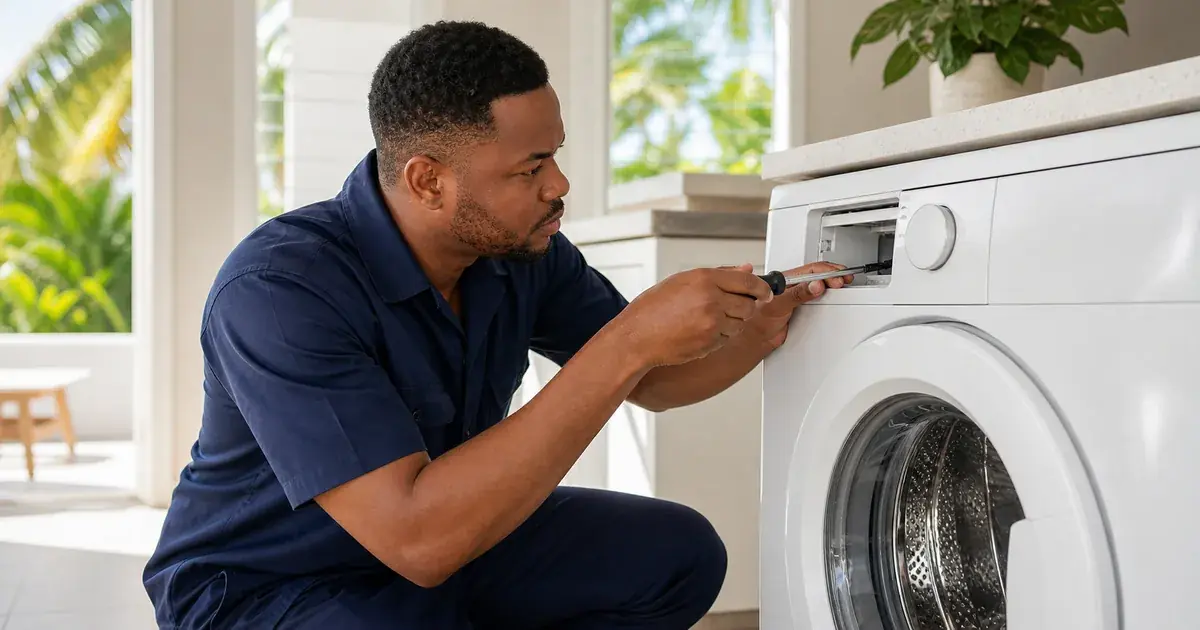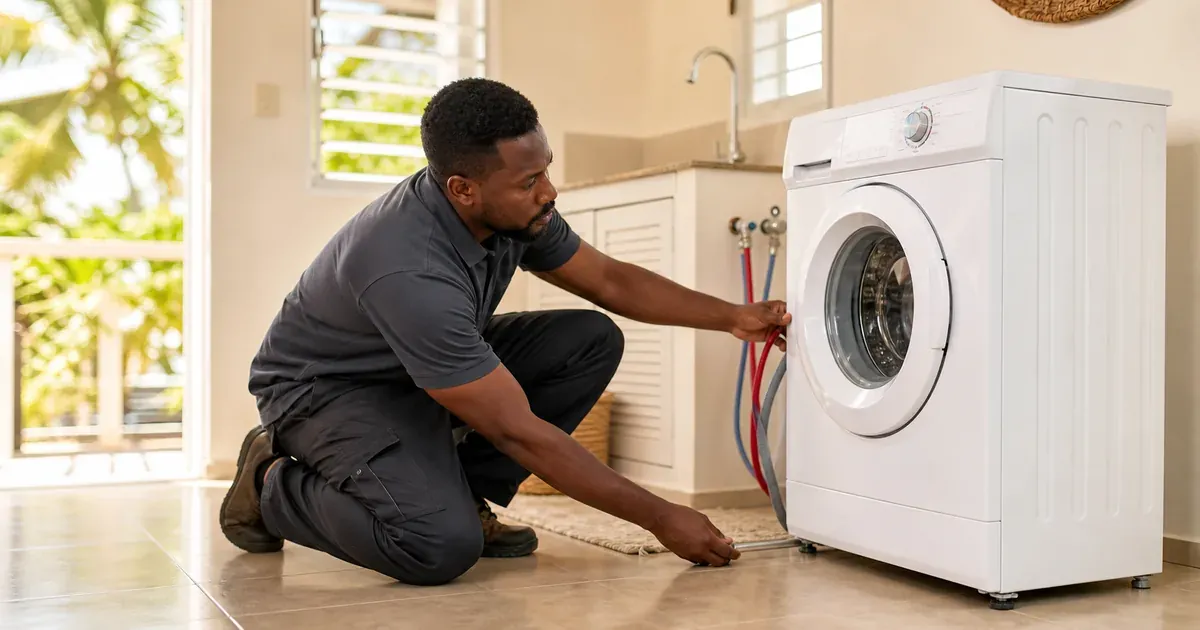
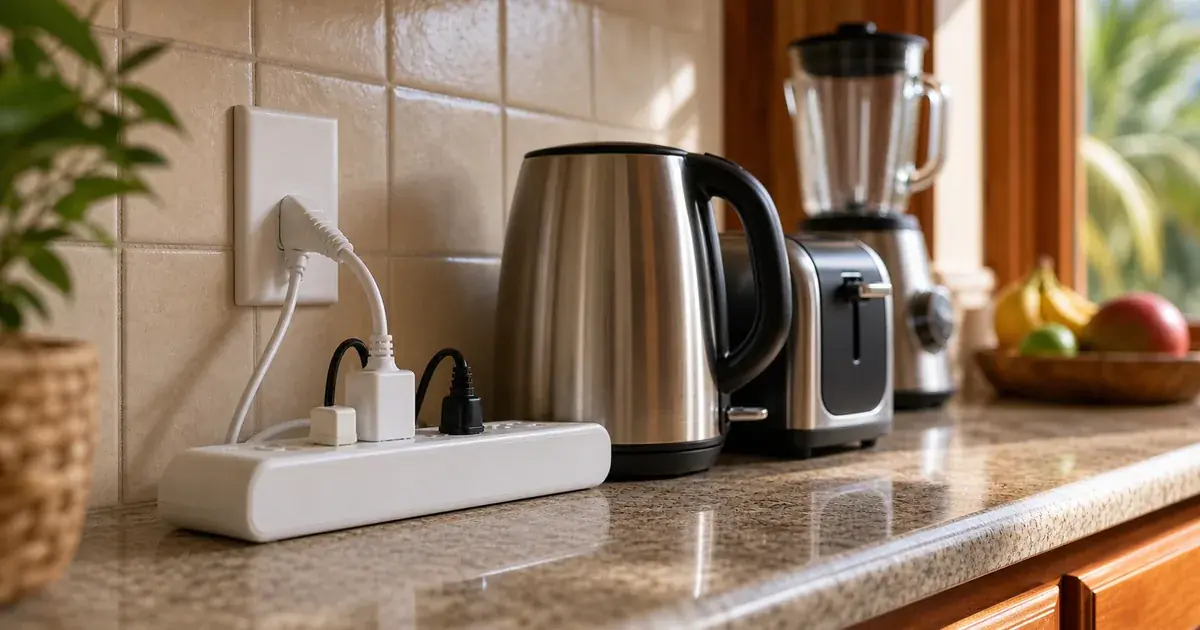
If I had to name the single biggest killer of appliances in Jamaica, it wouldn't be age, and it wouldn't be wear. It would be our power. The cuts, the surges, and the spikes that come when JPS power is restored quietly destroy more fridges, washing machines, and microwaves than anything else I see. And the frustrating part is that most of it is preventable for a fraction of what the repairs cost.
Let me explain what's actually happening inside your appliances when the power misbehaves, and what genuinely protects them.
Why modern appliances are so vulnerable
Twenty years ago, appliances were mostly mechanical — timers, motors, switches. A power surge might trip them, but they shrugged it off. Today, almost every appliance you own runs on an electronic control board: a circuit board with sensitive components that expect a steady, clean supply of electricity.
That's where the trouble starts. Those boards are designed for stable power. When the voltage spikes — even for a fraction of a second — the surge can fry components on the board instantly. And here's the cruel irony: a control board often costs more to replace than the surge protector that would have saved it.
The three ways our power damages appliances
1. The spike when power returns
This is the big one. When the power goes out and comes back, it rarely returns smoothly. There's often a surge — a brief jump in voltage — at the moment of restoration. Appliances that were left switched on take the full hit. I've replaced countless control boards and compressor relays that died not during the outage, but in the instant the lights came back on.
2. Brownouts and low voltage
It's not only spikes. When voltage sags too low — a brownout — motors and compressors struggle to run. A fridge compressor trying to start on low voltage draws excessive current and overheats, which wears out the start relay and can damage the compressor windings over time. Low voltage is a slow killer where a spike is a fast one.
3. Lightning and storm surges
During our storm season, a nearby lightning strike can send a massive surge down the power lines and into your home. This is the one that takes out multiple appliances at once. Nothing plugged in is truly safe from a direct event, which is why unplugging during storms remains the gold standard.
What actually protects your appliances
Here's the honest hierarchy, from cheapest to most thorough.
Surge protectors for smaller appliances
A decent surge protector strip is cheap insurance for microwaves, TVs, and smaller electronics — buy one with a real joule rating, not the cheapest strip on the shelf. They divert excess voltage away from your device, and they do wear out: a protector that has absorbed several big surges may no longer protect, so replace them every few years and choose ones with an indicator light. One important limit — a thin power strip is not the right protection for a fridge, washer, or air conditioner. Those big motor-driven appliances need a stabiliser or a dedicated fridge guard, which I'll come to next.
Voltage stabilisers and fridge guards for the big units
For your fridge, freezer, washing machine and AC, a voltage stabiliser — also sold as an AVR, an automatic voltage regulator — is the better tool. It actively smooths the supply, protecting against both high spikes and low brownouts. A dedicated fridge guard or delay protector adds one more safeguard that matters here: it stops the compressor from kicking back on in the first few minutes after the power returns, which is exactly when our supply is most erratic. For a fridge especially — running day and night, and not something you can unplug casually — this is one of the best investments you can make. It's far cheaper than a compressor.
Whole-home surge protection
If you want to protect everything at once, whole-home surge protection installed at your panel by a qualified electrician is the most comprehensive option. It's a bigger upfront cost, but for a home full of modern appliances it can pay for itself with a single avoided event.
The free option: unplug
Costs nothing, works every time. During a storm or a known outage, unplug what you can — especially anything you're not actively using. For the fridge, switch it off at the wall during a bad electrical storm and switch it back on once the supply has settled. Nothing beats a physical disconnection.
The signs your appliance took a hit
After a power event, watch for these. They tell me a board or relay may have been damaged:
- An appliance that's completely dead after the power returns
- A fridge that clicks every few minutes but won't start cooling — often a damaged start relay
- A washing machine that won't power on or behaves erratically
- A burning or electrical smell near any unit
- Display panels showing nonsense or flickering
If you notice any of these right after an outage, switch the appliance off and have it checked before running it again.
Why this matters more here than almost anywhere
I've worked on appliances long enough to say plainly: the failure rate I see in Jamaica is driven heavily by power quality. The same fridge that might run fifteen years on a stable supply elsewhere can lose its board twice in five years here. That's not the appliance's fault, and it's not yours — but it does mean protection isn't optional in our context. It's basic appliance care, every bit as important as cleaning the coils.
If a recent outage has left an appliance dead or behaving strangely, don't keep cycling the power hoping it sorts itself out. Get it looked at. I cover Kingston, Portmore, Spanish Town and the surrounding communities, and I can also advise on the right protection for your home. Reach out here and let's protect what you've got.
Frequently asked questions
Yes. Modern appliances run on electronic control boards that are sensitive to voltage spikes. A single surge when power is restored can burn out a board that costs far more than a surge protector would have.
For small electronics, a surge protector with a real joule rating. For big motor appliances — fridge, freezer, washer, AC — use a voltage stabiliser (AVR) or a dedicated fridge guard that also delays the compressor restart after an outage; a thin power strip won't protect those. Unplugging during a storm is the free option that always works.
Oshane founded Baytech Repairs and Installation and still does the repairs himself. He has spent years fixing washing machines, fridges, dryers and stoves in homes across Kingston, St. Andrew and St. Catherine. He writes these guides to help fellow Jamaicans get more life out of the appliances they already own — and to know when a problem is worth a call.