
I'll let you in on something most repair people won't say out loud: a good chunk of the washing machine repairs I'm called out for could have been put off for years with a few simple habits. Machines rarely die suddenly. They get neglected, a small problem festers, and then one day they quit. The customers whose machines last a decade aren't lucky — they just do a handful of small things consistently.
So here are the 13 tips I share with every customer, written for the way we actually live and wash here in Jamaica, with our hard water, our humidity, and our power that comes and goes.
1. Don't overload it
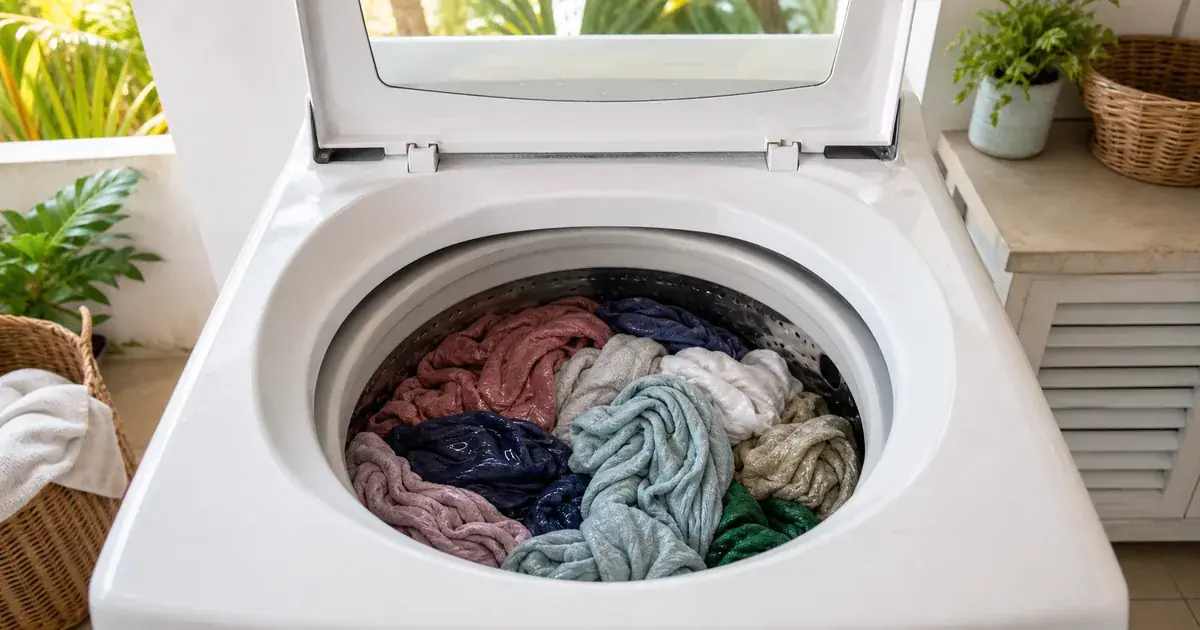
This is the big one. Stuffing the drum to save a cycle is the fastest way to wear out the bearings, the drive belt, and the motor. An overloaded machine can't balance, so it bangs and shakes, and over time that pounding loosens everything. As a rule, you should be able to fit your hand flat into the drum on top of the load.
2. But don't run it half-empty either
The opposite problem is real too. Tiny loads waste water and electricity, and a single heavy item like a mat or a pair of jeans on its own throws the drum off balance during the spin. Wait for a sensible load, or add a few towels to balance a small one.
3. Clean the drain filter every couple of months
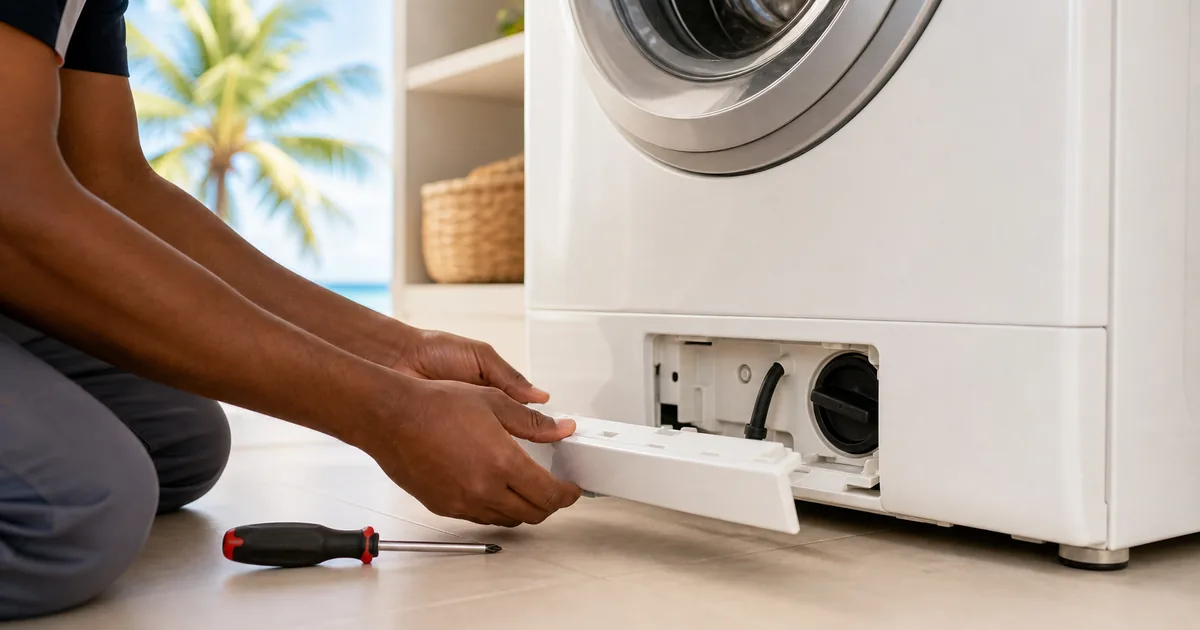
The drain filter catches coins, lint, and the small things that escape pockets. When it clogs, your machine struggles to drain — the exact problem I cover in why your washing machine won't drain. On most front-loaders it's behind a panel at the bottom front. Clean it out every couple of months and you'll prevent one of the most common faults I see.
4. Leave the door open between washes
In our humidity, a sealed-up wet drum is a breeding ground for mould and that musty smell. After the last load of the day, leave the door and the detergent drawer ajar so everything dries out. This single habit prevents the black mould that ruins door seals.
5. Wipe down the door seal
On front-loaders, water, hair, and grime collect in the folds of the rubber door gasket. Wipe it dry with a cloth weekly and check inside the fold for trapped coins or clips. A clean seal lasts years; a neglected one tears and leaks.
6. Run a hot maintenance wash once a month
Once a month, run an empty cycle on the hottest setting with either a cup of white vinegar or a proper machine cleaner. This clears detergent residue, kills odour, and — importantly for us — helps dissolve the mineral scale our hard water leaves behind.
7. Use less detergent than you think
More soap does not mean cleaner clothes. Excess detergent doesn't rinse out fully; it builds up inside the machine, feeds mould, and leaves residue on your laundry. Use the recommended amount, and cut it back further if you have soft rainwater catchment.
8. Respect the hard water
Much of Jamaica has hard water, and the minerals in it slowly coat the heating element and the inside of hoses. That scale reduces efficiency and eventually causes faults. Periodic vinegar washes help, and if your area has particularly hard water, a descaling product a few times a year is a worthwhile investment.
9. Check the hoses twice a year
The fill hoses at the back can perish, bulge, or work loose. A burst fill hose can flood a room in minutes because it's under mains pressure. Twice a year, pull the machine out and check the hoses for cracks, bulges, and tight connections. Replace any that look tired — they're cheap compared to water damage.
10. Protect it from power surges
Our power supply is hard on appliances. A spike when the electricity is restored can take out the control board, which is one of the more expensive parts to replace. Plug your machine into a surge protector, or unplug it during storms and outages. I explain exactly how this damage happens in how voltage spikes destroy your appliances.
11. Level the machine properly
A machine that isn't sitting level will rock, walk across the floor, and wear its bearings unevenly. Adjust the feet until it's solid and doesn't wobble when you push a corner. On an uneven tiled floor this makes a real difference to noise and longevity.
12. Empty pockets before washing
Coins, keys, and clips that escape pockets are the number one thing I pull out of jammed pumps and torn seals. A thirty-second check before you load saves you a repair bill. Make it a habit for the whole household.
13. Don't ignore the small signs
A new noise, a longer cycle, a faint smell, water that drains slowly — these are your machine talking to you. A bearing that's just starting to whine is a modest repair; the same bearing ignored for six months can destroy the drum and tub and turn into a replace-the-machine situation. Catching things early is the whole game.
The honest payoff
None of these are complicated, and none of them cost much. Together they're the difference between a machine that lasts five years and one that lasts twelve. If you're already hearing a noise you can't explain, or your machine is doing something new, don't wait for it to fail completely — that's almost always the more expensive path. I'd rather catch it early.
If you'd like a second opinion on a machine that's not quite right, I cover Kingston, Portmore, Spanish Town and the surrounding communities. Get in touch and we'll take a look.
Frequently asked questions
Run a hot maintenance wash (empty, with vinegar or a machine cleaner) once a month, and wipe the door seal and detergent drawer weekly. In Jamaica's humidity that schedule keeps mould and odour away.
Yes. Mineral scale builds up on the heating element and inside hoses over time, reducing efficiency and eventually causing faults. Periodic descaling and not overdosing detergent both help a lot.
Oshane founded Baytech Repairs and Installation and still does the repairs himself. He has spent years fixing washing machines, fridges, dryers and stoves in homes across Kingston, St. Andrew and St. Catherine. He writes these guides to help fellow Jamaicans get more life out of the appliances they already own — and to know when a problem is worth a call.