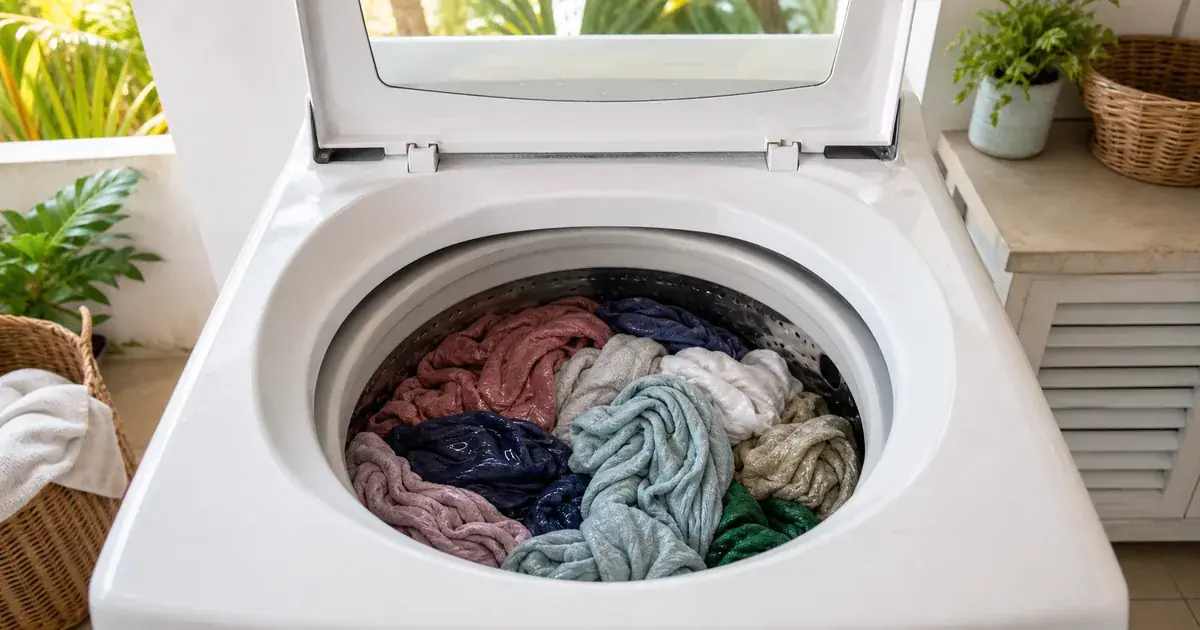
You pull your laundry out at the end of the cycle and it's still dripping wet, heavy with water. The machine ran, it sounded normal, but somewhere along the way it skipped the part that matters most: the high-speed spin that wrings your clothes out. This is a different fault from a machine that won't drain, though the two get confused all the time, and it's one of the more common calls I get.
Here's how I work through it, and what you can check before reaching for the phone.
First, is it draining or spinning that's failing?
These two things happen back to back at the end of a cycle — the machine drains the water out, then spins fast to wring the clothes. If you open the lid to a tub still full of water, that's a drainage problem. If the water is gone but the clothes are sopping, that's a spin problem. Sorting out which one you've got tells me where to look, so it's the first thing to establish.
The common reasons a washer won't spin
An unbalanced load
Modern machines are smart enough to refuse a fast spin if the load is bunched to one side — spinning an unbalanced drum at high speed would shake the machine across the floor. So they slow down or skip the spin to protect themselves. A single heavy item like a blanket, a mat, or a pair of jeans on its own is the usual offender. Open it up, spread the load evenly, and run a spin cycle. If it spins fine now, that was your answer.
The machine isn't level
Same idea as above. If the machine rocks because it isn't sitting level — common on the uneven tiled floors in a lot of our homes — it can detect the wobble and refuse to spin. Adjust the feet until it's solid and doesn't move when you push a corner.
A faulty lid switch or door lock
A washer won't spin unless it's certain the lid or door is closed — it's a safety feature. On a top-loader that's a lid switch; on a front-loader it's the door lock. When that part fails, the machine thinks the door is open and skips the spin even though everything else is fine. This needs testing with a meter, so it's where the job moves from DIY into technician work.
A worn or broken drive belt
Many machines drive the drum with a belt. Over years it stretches, cracks, or snaps — and a slipping or broken belt means the motor turns but the drum doesn't spin properly. This is a common, very fixable wear part.
Worn motor coupling, clutch, or bearings
Depending on the machine, a worn motor coupling, a tired clutch, or failing drum bearings can all rob the spin of power. Bearings especially tend to announce themselves with noise first — if your machine got loud before it stopped spinning, read my piece on why a washing machine gets loud, because the two are often the same underlying problem caught at different stages.
A drainage fault in disguise
If the machine can't pump the water out, it won't move to the spin — so a drainage problem can look like a spin problem. That's why I always check drainage first, and it's covered fully in why your washing machine won't drain.
The control board
Last on the list, as always, the main control board can fail to sequence the spin. I rule out every cheaper, more common cause before going near the board — and you should be cautious of anyone who blames it first.
What you can safely check yourself
Three things, all free: redistribute an unbalanced load, level the machine, and confirm it's actually draining the water out. Between them, those rule out a good share of no-spin calls.
What needs a technician
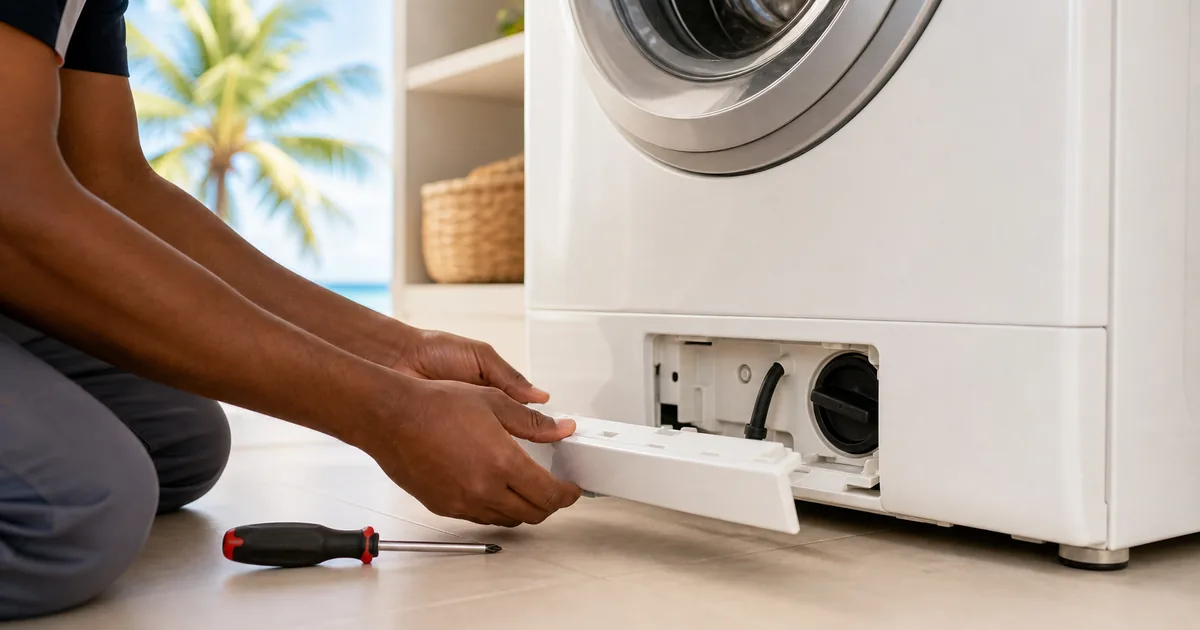
Testing the lid switch or door lock, replacing a drive belt, and anything involving the clutch, coupling, motor or bearings means opening the machine and testing safely. None of these are expensive parts on their own — the value of getting someone in is a correct diagnosis so the right part is replaced once.
If you've balanced the load, levelled the machine and confirmed it's draining, and your clothes are still coming out soaked, it's time for a proper look. I cover Kingston, Portmore, Spanish Town and the surrounding communities — get in touch and I'll find what's stopping the spin.
Frequently asked questions
The machine is washing and draining but not spinning fast enough to wring the water out. Common causes are an unbalanced load, a faulty lid switch or door lock, a worn drive belt, or a drainage fault leaving water in the tub.
You can rule out the easy causes: redistribute an unbalanced load, make sure the machine is level, and confirm it's actually draining. If those are fine and it still won't spin, the lid switch, belt, motor or bearings need testing — that's a technician job.
Oshane founded Baytech Repairs and Installation and still does the repairs himself. He has spent years fixing washing machines, fridges, dryers and stoves in homes across Kingston, St. Andrew and St. Catherine. He writes these guides to help fellow Jamaicans get more life out of the appliances they already own — and to know when a problem is worth a call.