This is one of the most worrying calls a homeowner makes, and I understand why. You open the fridge, the light comes on like normal, but the inside feels warm and your food is at risk. The light working actually tells us something useful: your fridge has power. So the problem isn't the outlet or the plug — it's somewhere in the cooling system. Let me walk you through what I check, starting with the things you can rule out yourself.
Before you panic: a few quick checks
A surprising number of "my fridge stopped cooling" calls turn out to be something simple. Spend ten minutes on these before assuming the worst.
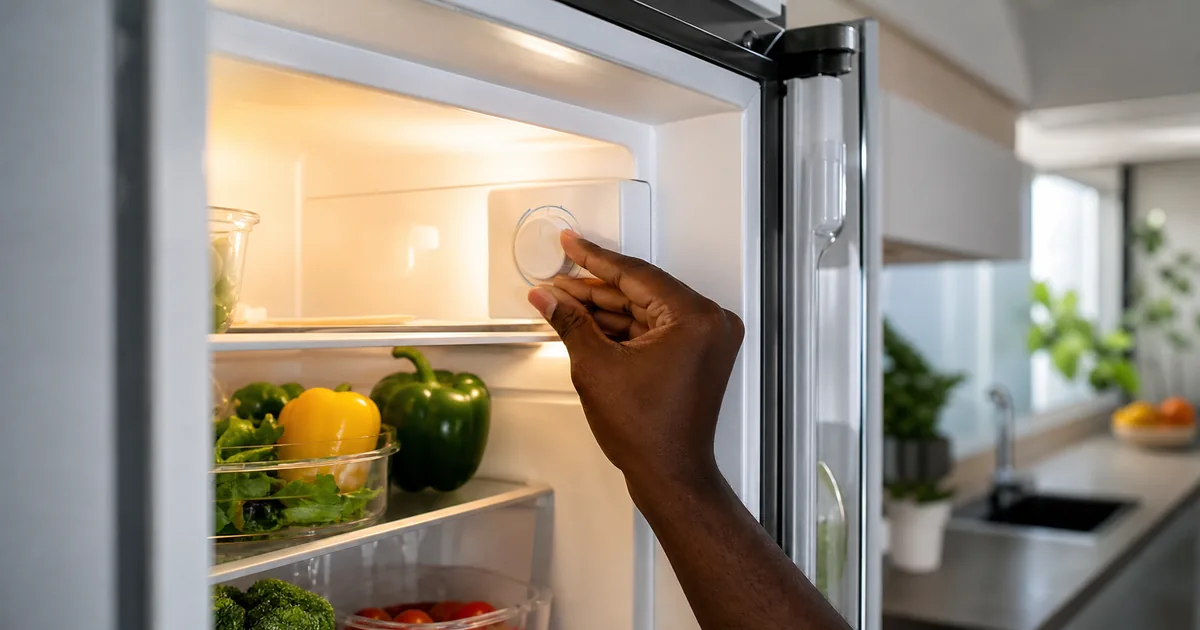
- Check the temperature dial. It's easy for a dial to get knocked when you're loading groceries or cleaning. Make sure it hasn't been turned down to the warmest setting or switched off entirely.
- Make sure the doors are sealing. An overpacked fridge, a jar pushing the door ajar, or a perished door gasket can let warm air pour in faster than the fridge can cool. Hold a sheet of paper in the door as you close it — if it slides out easily, your seal is weak.
- Give it room to breathe. A fridge pushed tight against the wall, or boxed into a tight cabinet, can't release heat. It needs a few inches of clearance at the back and top.
- Think about recent power events. If the power's been cut and restored a few times — as it often is here — the compressor may have struggled to restart. More on that below.
If none of those apply, we move on to the mechanical causes.
The most common causes of a warm fridge
Dirty condenser coils
This is the single most common cause I find, and it's the most preventable. The condenser coils — usually at the back or underneath the fridge — release the heat your fridge pulls out of the food compartment. When they're caked in dust, pet hair, and the general grime of a busy kitchen, they can't shed heat efficiently, and the fridge slowly loses its ability to cool.
Pull the fridge out, switch it off, and look at the coils. If you can't see metal for dust, that's very likely your problem. A vacuum and a coil brush bring a lot of "dying" fridges right back to life. I'd recommend doing this twice a year as routine.
A failed evaporator fan
Most modern fridges cool the freezer first, then blow that cold air into the fridge compartment with a small fan. If that fan fails, you'll often notice the freezer still gets cold while the fridge above stays warm. Listen for the fan when the door's open and the switch is taped down — silence where there should be a soft whir is a strong clue.
A frost-blocked vent or defrost fault
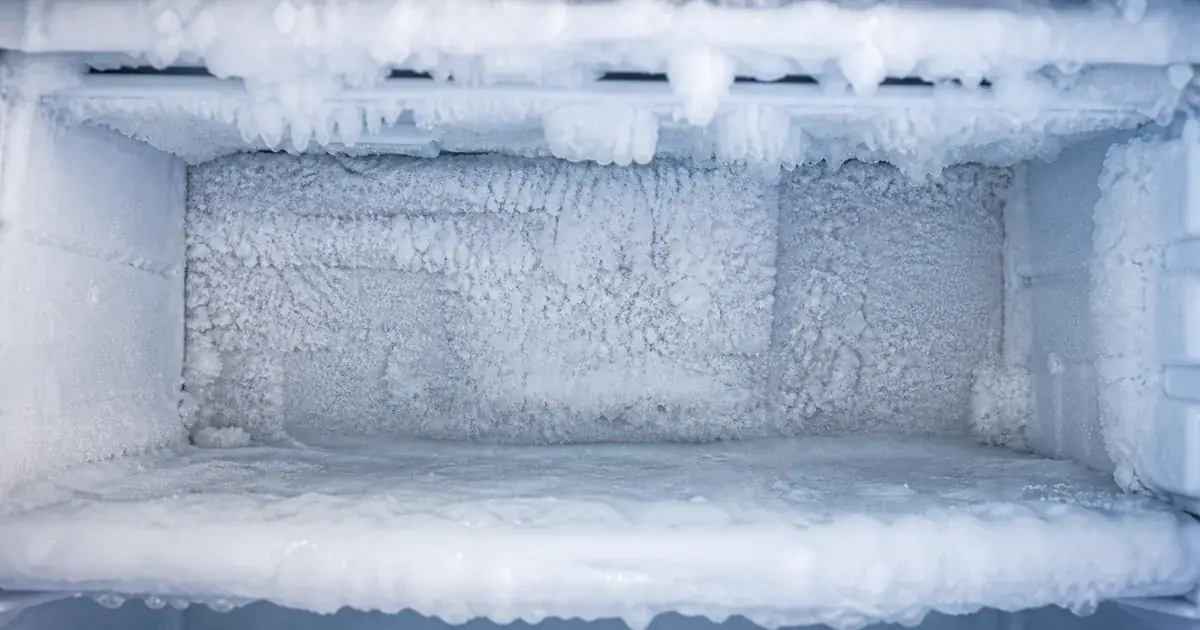
If ice builds up around the vents where cold air passes from freezer to fridge, the airflow gets choked off. This ties into a bigger issue I see constantly in our humid climate — read my guide on why your freezer keeps building up ice if you're also noticing frost. A failed defrost heater or thermostat lets frost accumulate until it blocks the system entirely.
The start relay or capacitor
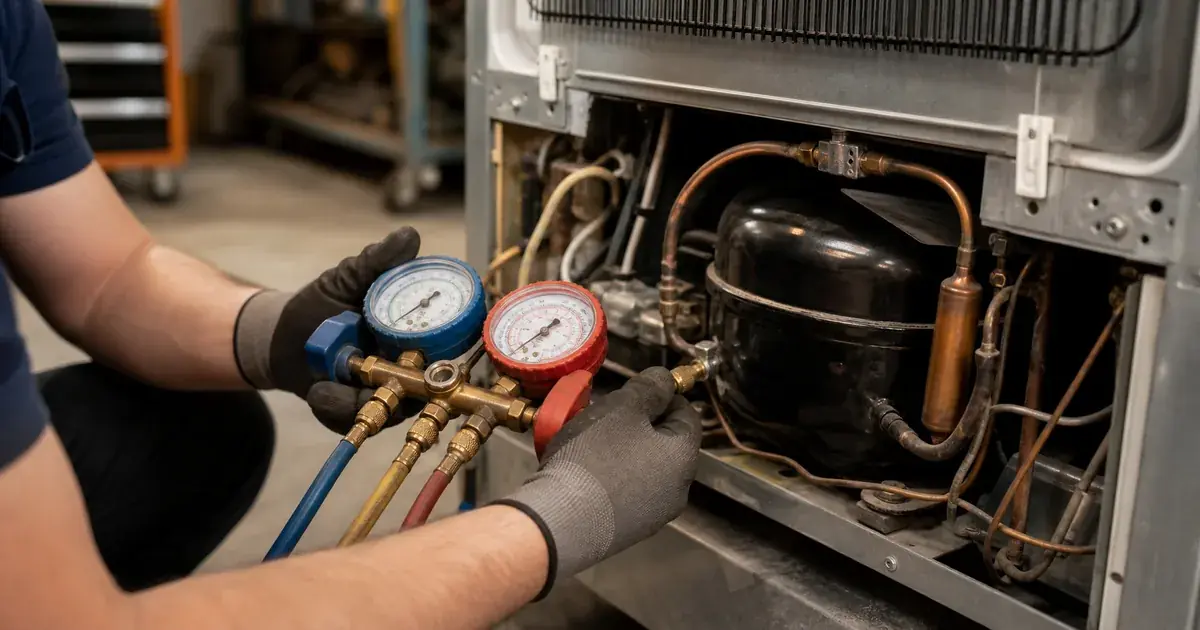
The compressor needs a small component called a start relay (and sometimes a capacitor) to kick it into action. These are among the first things to fail after a power surge. When the relay goes, the compressor may click and try to start, then give up — you'll sometimes hear a click every few minutes. The good news is that a relay is a relatively inexpensive part to replace.
The compressor itself
This is the one everyone fears, and it's the one I diagnose last, not first. The compressor is the heart of the fridge. If it's truly failed, repair becomes a serious cost decision. But here's the honest truth I tell every customer: far more "dead compressor" fridges are actually a bad relay, a failed fan, or blocked coils. A technician who tells you the compressor is gone without testing the cheaper parts first is either rushing or not being straight with you.
What to do about your food right now
While you sort out the cause, protect what's inside. Keep the doors shut as much as possible — a full freezer holds safe temperatures for around 48 hours unopened, and a fridge for about four hours. Move what you can into a cooler with ice. Don't refreeze meat that has fully thawed and come up to room temperature; when in doubt, throw it out.
How long before I know if it's fixed?
If you've cleaned the coils, adjusted the temperature, and given the fridge room, be patient. A fridge that's been warm and then restored can take a full 24 hours to pull back down to proper temperature, especially if it's full. Don't keep adjusting the dial up and down — set it correctly and leave it. If it's still warm the next day, something has genuinely failed and it's time for a proper diagnosis.
When to call
If you've ruled out the simple causes and your fridge is still warm after a day, the cooling system needs hands on it. Most of the real faults — fans, relays, thermostats, defrost components — are affordable repairs, and I'll always tell you honestly when a fridge is worth fixing and when your money is better spent replacing it. I cover that decision in detail in repair or replace?.
A warm fridge is stressful because of the food on the line. If you're in Kingston, St. Andrew, St. Catherine or nearby, get in touch and I'll prioritise it — cooling problems don't wait.
Frequently asked questions
If you've adjusted the temperature or cleaned the coils, give it 24 hours. A fridge that's been off or overloaded can take a full day to pull back down to temperature. If it's still warm after that, something has failed.
Keep the doors shut. A full freezer holds safe temperatures for about 48 hours unopened, a fridge for around 4 hours. Move anything you can to a cooler with ice, and don't refreeze meat that has fully thawed.
Often yes — many no-cooling faults are a fan, thermostat, or relay rather than the compressor, and those are affordable fixes. I'll tell you honestly after the diagnosis whether repair or replacement makes more sense for your unit.
Oshane founded Baytech Repairs and Installation and still does the repairs himself. He has spent years fixing washing machines, fridges, dryers and stoves in homes across Kingston, St. Andrew and St. Catherine. He writes these guides to help fellow Jamaicans get more life out of the appliances they already own — and to know when a problem is worth a call.