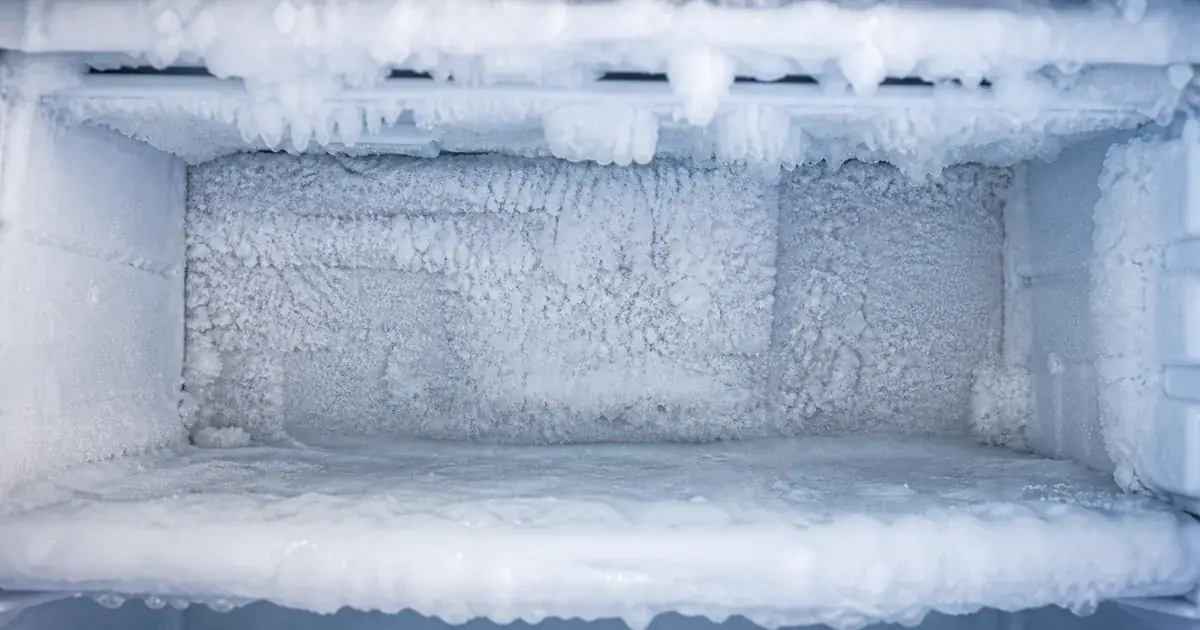
If you're chipping ice off the walls of your freezer just to fit the chicken in, something's wrong. A light, even dusting of frost is normal. But thick ice that creeps over the shelves, builds back within days of you clearing it, or forms heavily on just one wall — that's a fault, and in our humid climate it tends to happen faster than people expect. Let me explain what's actually going on and how to stop it for good.
Why freezers build up ice in the first place
Ice forms when moist air meets the cold surfaces inside your freezer and the moisture condenses and freezes. A well-sealed, well-functioning freezer keeps that moisture to a minimum and quietly melts away small frost during its automatic defrost cycle. When you get serious build-up, it means either too much moist air is getting in, or the defrost system that's supposed to manage it has failed.
In Jamaica, the "too much moist air" part is worth taking seriously. Our air is humid, so every time the door opens, more moisture rushes in than it would in a dry climate. That makes the rest of these factors matter even more.
The common causes, from simplest to most serious
A worn or dirty door seal
The rubber gasket around the freezer door is the first line of defence. If it's torn, hardened, or just grimy enough that it doesn't seal cleanly, humid air leaks in continuously and freezes on contact. This is the most common cause I find, and the easiest to test.
Try the paper test: close the door on a sheet of paper and pull. If it slides out with no resistance, the seal at that spot is weak. Walk it around the whole door. Often a good clean with warm soapy water restores a seal that's just dirty; if the rubber is cracked or deformed, it needs replacing.
Leaving the door open or opening it too often
It sounds obvious, but a door that doesn't latch firmly, or a freezer that's so overpacked an item blocks the door from closing, will frost up fast. The same goes for a chest freezer in a hot utility area where the lid gets opened constantly. Be honest about whether the door is truly closing every time.
Putting warm or uncovered food in
Hot leftovers and uncovered liquids release a lot of moisture as they cool. That moisture has to go somewhere, and it ends up as frost. Let food cool before freezing, and cover everything. It's a small discipline that makes a visible difference.
A failed defrost system
Here's where it crosses into a repair. Frost-free freezers have a defrost heater and a defrost thermostat (and a timer or control board) that periodically melt away frost before it accumulates. When one of those parts fails, the automatic defrost stops happening, and frost builds steadily until it chokes the airflow — which, by the way, will also make your fridge compartment stop cooling properly, because the two share an air path on many models.
The tell-tale sign of a defrost fault is ice that comes back heavily within a week or two of you manually defrosting, often packed solid around the back panel of the freezer. That pattern points to a part that needs replacing, not a habit that needs changing.
A blocked drain or a stuck damper
Some build-up issues come from a blocked defrost drain (so melt-water refreezes instead of draining away) or a faulty air damper that won't close. These are less common but worth a technician checking if the seal and defrost system test fine.
How to defrost it properly in the meantime
If the ice is already thick, here's the safe way to clear it:
- Empty the freezer and move the food to a cooler with ice.
- Switch the freezer off and leave the door open.
- Let the ice melt naturally — lay towels down to catch the water. Never chip at ice with a knife or screwdriver; it's the fastest way to puncture a coolant line and turn a cheap fix into a dead freezer.
- A bowl of hot water inside speeds things along.
- Dry everything thoroughly before switching back on.
Will defrosting fix it for good?
That's the key question. If the cause was a habit — leaving the door ajar, uncovered food, a dirty seal — then defrosting plus fixing that habit solves it. But if a defrost component has failed, the ice will come back within weeks no matter how carefully you defrost. So defrost first; if it returns quickly, you've diagnosed yourself a defrost-system fault and it's time to call.
When to call a technician
Call when the ice keeps returning fast after a proper defrost, when it builds heavily on the back panel, or when you've cleaned and checked the seal and it's still piling up. Those point to defrost components or airflow problems that need testing and parts. Most are affordable repairs — far cheaper than replacing a freezer over a faulty thermostat.
If you're across Kingston, St. Andrew or St. Catherine and the frost just won't quit, reach out and I'll get it diagnosed properly. While you're at it, it's worth reading my appliance care guide for Jamaica's climate — humidity is behind more freezer problems here than anything else.
Frequently asked questions
A light, even coating is normal. Thick ice that builds back quickly after you remove it, or frost only on one wall, points to a defrost-system or door-seal problem worth investigating.
Defrosting clears the symptom, but if a seal, defrost heater, or thermostat has failed the ice will return within weeks. Defrost first — but if it comes back fast, the underlying part needs replacing.
Oshane founded Baytech Repairs and Installation and still does the repairs himself. He has spent years fixing washing machines, fridges, dryers and stoves in homes across Kingston, St. Andrew and St. Catherine. He writes these guides to help fellow Jamaicans get more life out of the appliances they already own — and to know when a problem is worth a call.